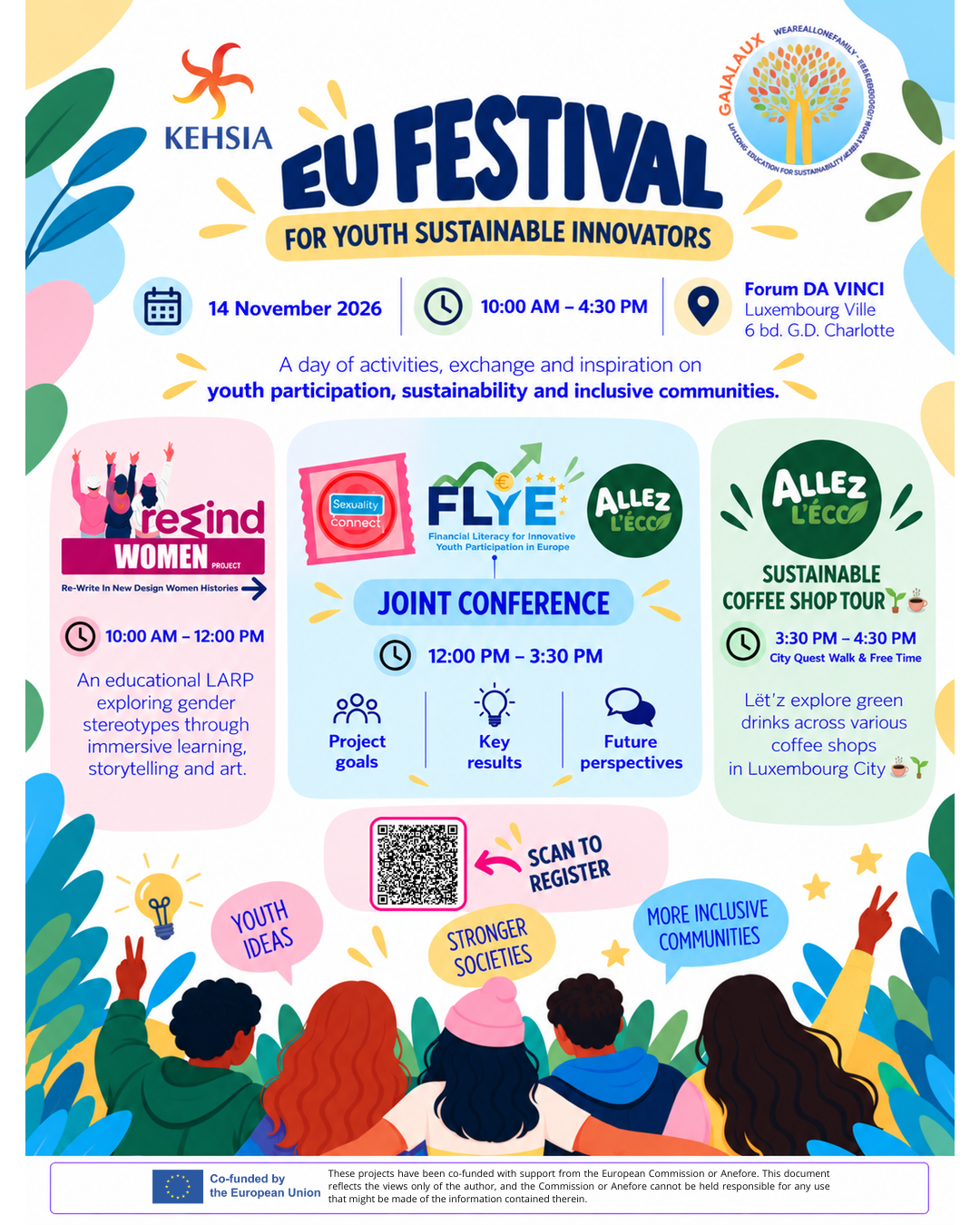
How can we make events more sustainable and inclusive? This was the central question behind the Allez l’Éco training in Luxembourg from 9 September to 12 November, which brought together online learning, collaborative sessions and hands-on workshops to explore how sustainability can be put into practice. All these activities were part of the preparation for the final event, the EU Festival for Youth Sustainable Innovators, on 14 November 2026 at Forum da Vinci in Luxembourg City.
At the heart of the training was the Allez l’Éco E-Learning Platform , which provides participants with eight learning modules covering different aspects of sustainable event management. From setting sustainability goals and understanding circularity to responsible sourcing, accessibility and inclusion, the modules offer practical knowledge and guidance for organising more sustainable events (You can also watch the introductory tutorial video to the learning platform here).
From Learning to Planning
Alongside individual online learning, participants took part in three interactive online sessions, where they had the opportunity to explore sustainability challenges and apply their knowledge to a real project, using Miro (view the Miro board here) to develop their ideas collaboratively.
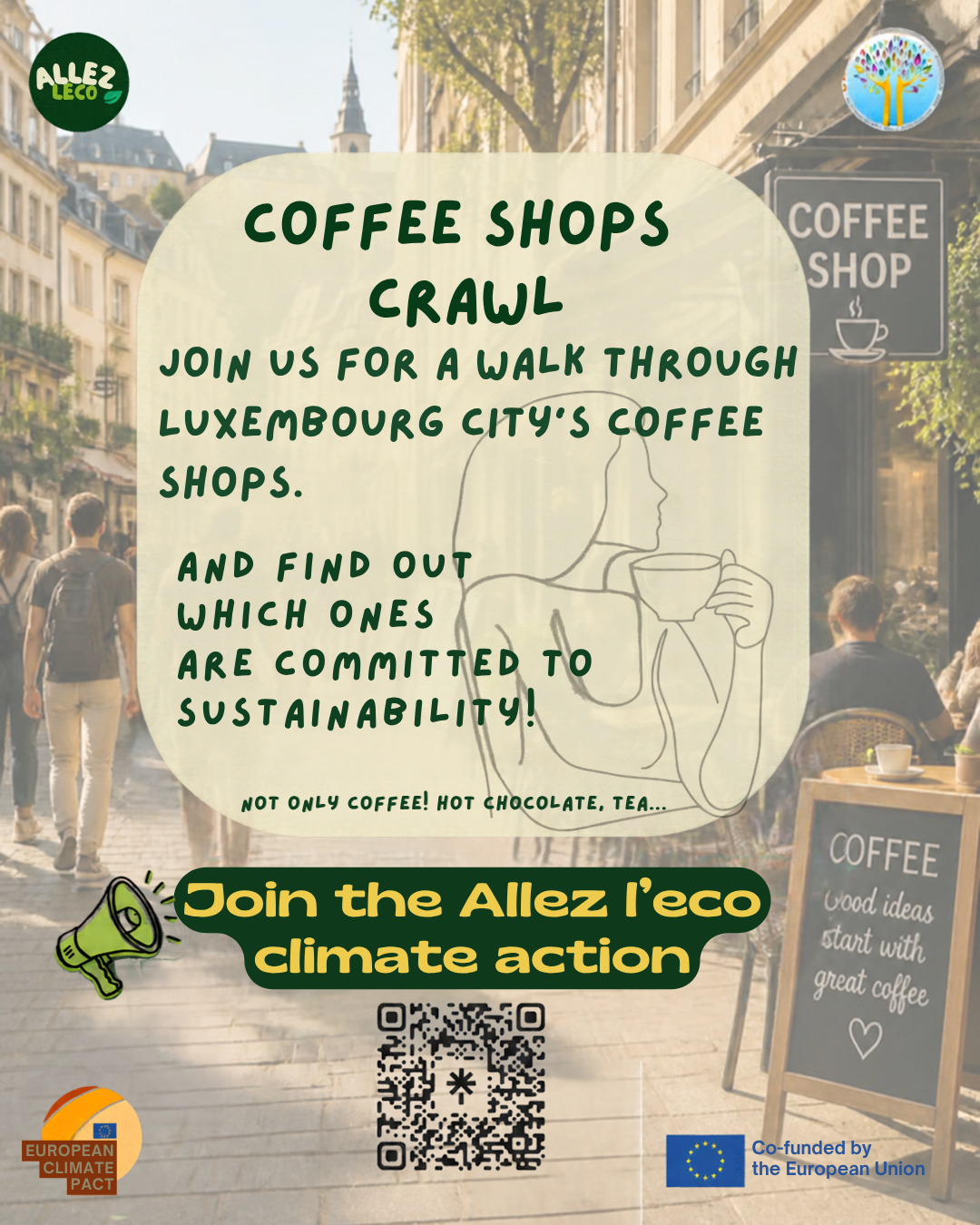
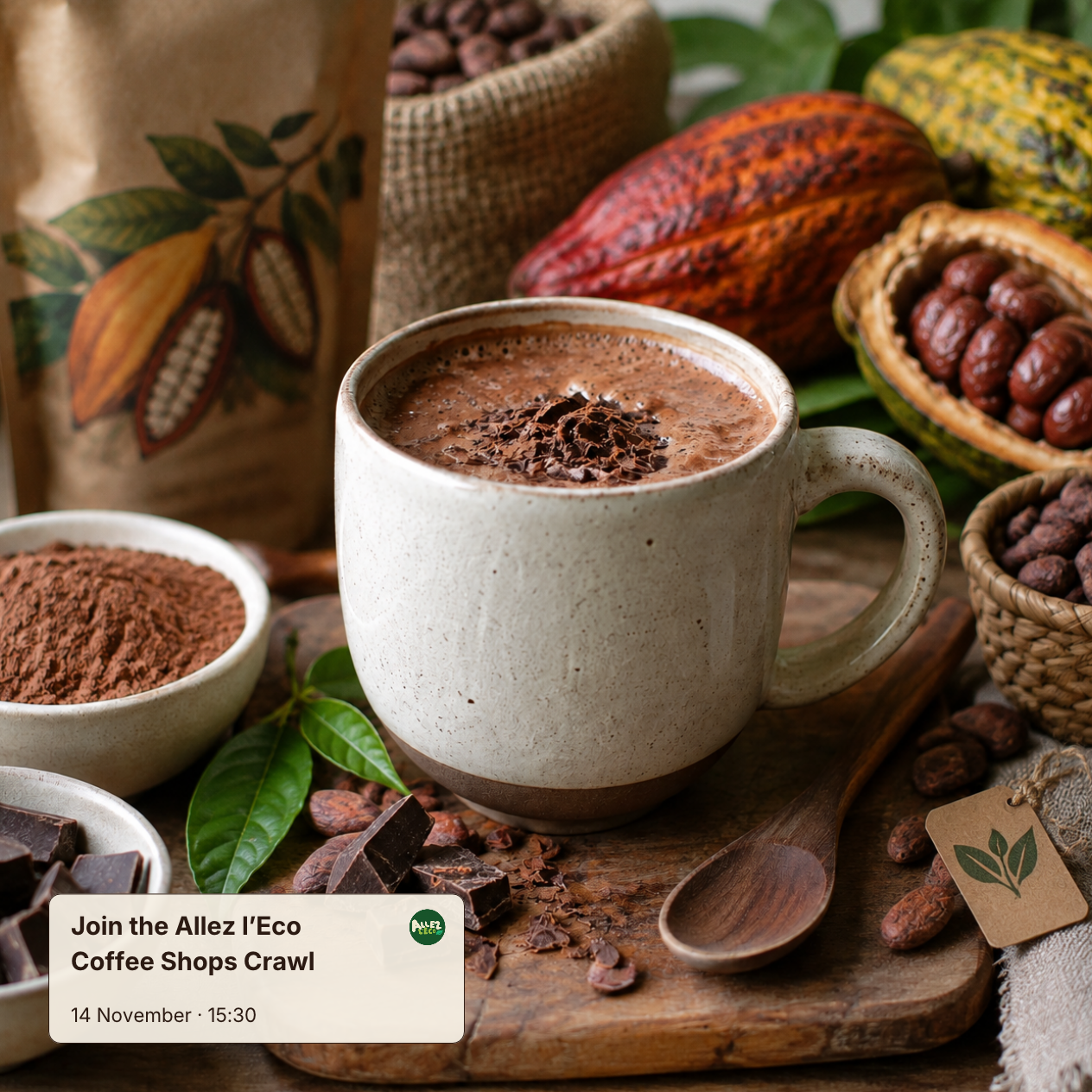
The first session focused on brainstorming and developing an initial event concept: a Sustainable Coffee Shop Tour in Luxembourg City, taking place as part of the final festival from around 15:00 onwards. The aim was to go beyond simply visiting coffee shops and use coffee, tea and chocolate as starting points to raise awareness of the environmental and social impacts of their production, including deforestation, pesticide use, soil degradation and working conditions.
In the following sessions, participants explored the three dimensions of sustainability – environmental, social and economic – and discussed how they could be translated into concrete measures for their event. Particular attention was given to circularity, sustainable transportation and local sourcing. They also considered which measures could have the greatest environmental impact and how to make sustainability engaging and meaningful for participants.
As the concept developed, the group identified its target audience, made key organisational decisions and developed initial plans for communication and the distribution of responsibilities. An important aspect was exploring how to collaborate and make decisions as a team without traditional hierarchies. Participants were encouraged to take initiative and make decisions collectively.
The result was a tour of several coffee shops, where participants could discover different sustainability practices, exchange observations and collectively assess the cafés’ approaches to sustainability, while reflecting on how more sustainable consumer choices can make a difference.
Practical Workshops
The training also offered several opportunities to put sustainability into practice through creative and practical workshops.
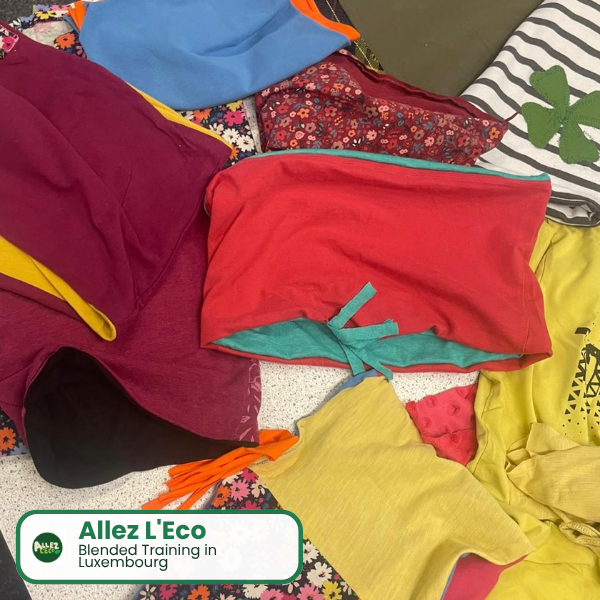
During the Textile Upcycling Creative Labs, guided by textile creators from the GAIALUX team, participants experimented with giving fabrics a second life. Across several sessions, they explored creative ways to reuse textiles and transform existing materials into practical, sustainable items for the final event, showing how resources can be given a new purpose instead of being discarded.
Another part of the programme focused on sustainable food and waste management. During two practical workshops at Microtarians Lab, participants explored how to prepare simple, healthy and sustainable snacks while learning about responsible food management and ways to reduce food waste at events.
Putting Sustainability into Practice
By combining digital learning, collaborative planning and practical experimentation, Allez l’Éco aimed to strengthen participants’ knowledge and develop competences essential for organising events that are not only environmentally responsible but also socially inclusive: green skills, practical problem-solving abilities, creative thinking, teamwork and collaboration.
The training culminated in the EU Festival for Youth Sustainable Innovators on 14 November 2026, which provided an opportunity to put the different elements of the learning process into practice, including through the Sustainable Coffee Shop Tour.
Interested in learning more about sustainable event management? Explore the Allez l’Éco Educational Syllabus and discover its eight modules and practical resources.
by Olivia Pollmann
GaiaLux volunteer and Allez l’Éco trainee
Other Events
Allez L'Éco, Article, Events, Senza categoria