An enthusiast’s perspective on coffee quality, responsible consumption and sustainability.
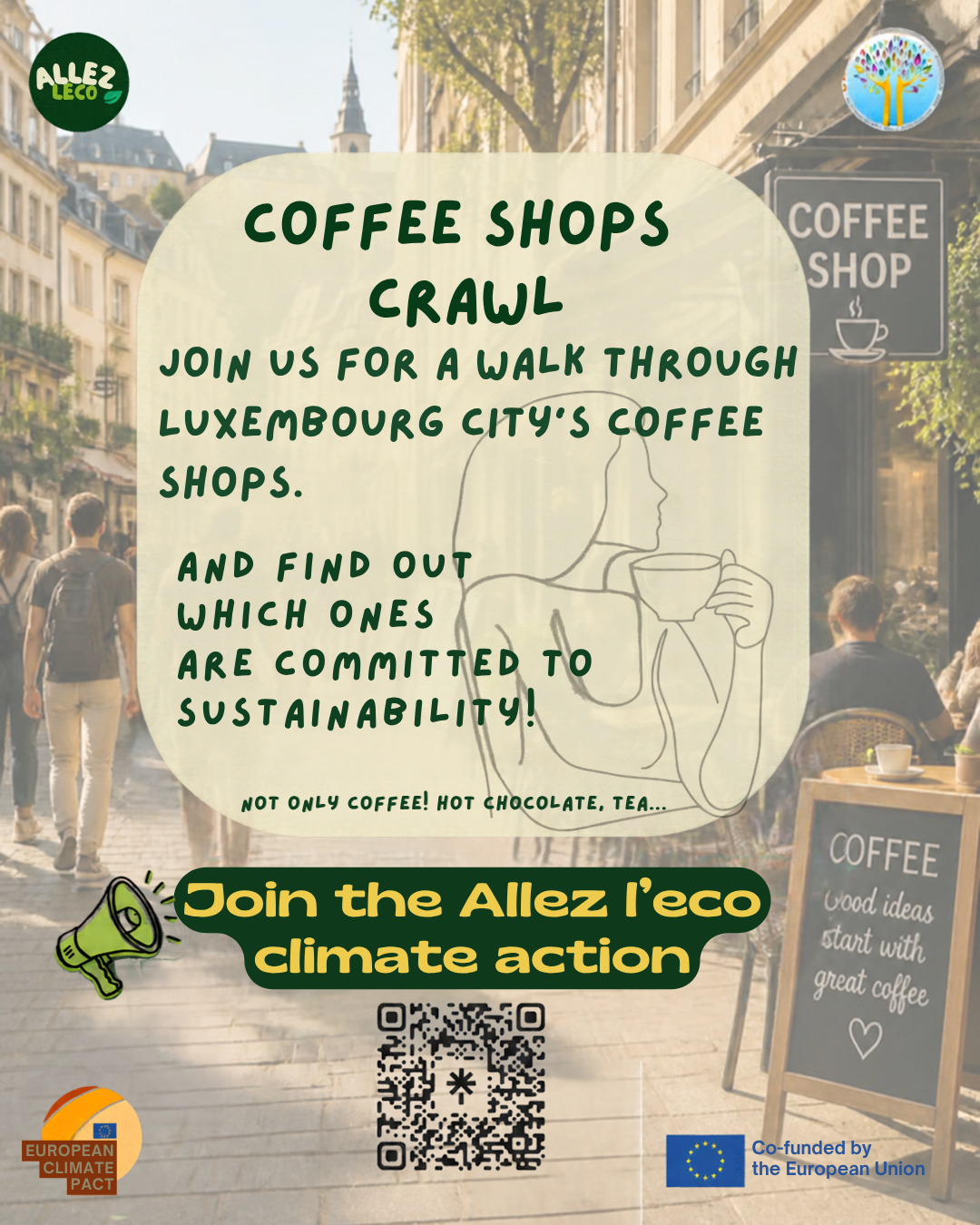
This article is a contribution by Alessandro La Malfa to the Allez l’Éco Climate Action – Coffee Shops Crawl, taking place on Saturday, 14 November, at 15:30 in Luxembourg City. Through this initiative, we invite participants to explore the links between coffee quality, responsible consumption, sustainability and the environmental and social impact of the coffee supply chain.
Q1. When you walk into a coffee shop, what do you usually look at first?
The first thing I look at is how many different single-origin coffees they offer. There is a big difference between a place that only serves standard blends and one that offers several single-origin coffees. Sometimes a coffee shop has only one option, which is not even available to drink at the table, but can only be purchased as a bag of beans. For me, the variety and availability of single-origin coffees are already a first indication of the attention they pay to coffee quality.
Q2. How can you tell whether a coffee shop takes proper care of its coffee beans?
One important aspect is how they grind the coffee. If different single-origin coffees are ground using the same grinder, some coffee from the previous grinding may remain inside and end up in the next cup.
Ideally, coffee shops should have dedicated grinders for different coffees or use grinders designed to minimise coffee retention.
I also look at how much coffee is kept in the grinder’s hopper. Beans should not remain exposed to air for too long, because oxidation affects their quality. Of course, you cannot know the actual turnover without spending the whole day there, but I usually ask them to open the hopper so I can smell the beans. If they smell rancid, it may indicate that they have been stored for too long or were roasted a long time ago.
Q3. Why is the roasting date so important?
The roasting date is one of the first things I check. Ideally, coffee should be consumed within one month, or two months at the most. Three months would be the absolute maximum.
After roasting, coffee gradually loses its aromatic qualities, especially if it is not stored properly. This is why I appreciate coffee shops and roasters that clearly indicate the roasting date on their packaging.
Q4. Does coffee packaging also make a difference in terms of sustainability and quality?
Yes absolutely.
First of all, coffee should ideally be consumed from around two weeks after roasting, once much of the excess CO₂ has been released. If consumed too soon, the high CO₂ content can negatively affect the flavour, sometimes giving the coffee an unpleasant, almost chemical taste.
After this initial resting period, proper packaging and storage become essential both environmentally and in terms of preserving coffee quality.
Coffee bags should ideally be recyclable and equipped with a one-way valve. When coffee is roasted, it releases CO2. The valve allows this gas to escape while preventing oxygen from entering the bag.
Since oxygen contributes to oxidation, this helps preserve the coffee for longer.
I sometimes jokingly test the valve by blowing into it to see whether the bag inflates. It is probably a little obsessive! But when I buy several coffees, I want to make sure they are properly preserved. At home, I use special containers that help remove oxygen, which allows me to enjoy different coffees over a longer period without compromising their quality.
Q5. How important is it to know where coffee comes from and who produces it?
For me, this is one of the most important aspects of sustainability: how much money actually reaches the people who grow the coffee.
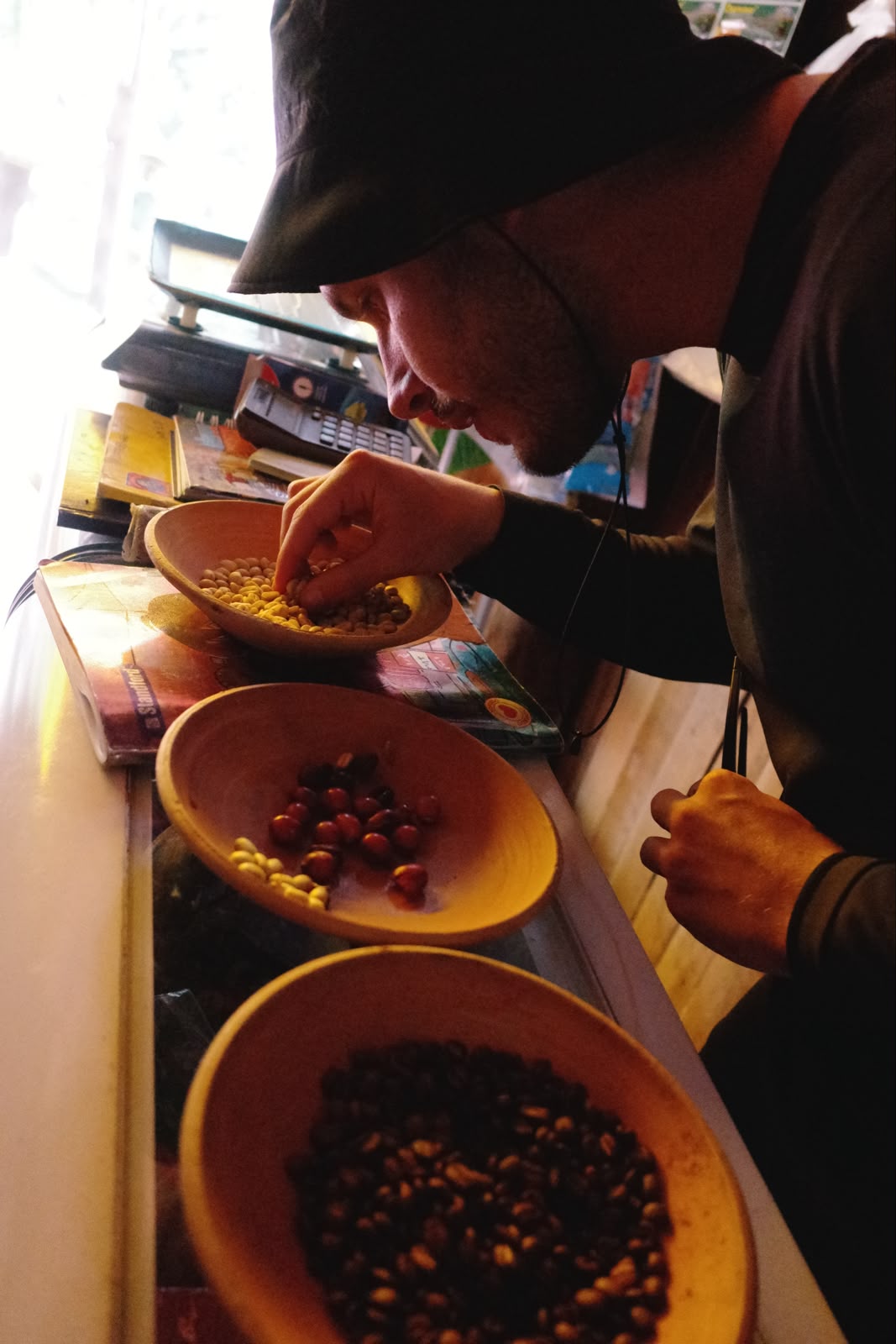
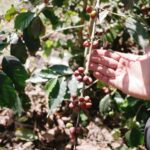
This summer, I visited coffee plantations in Peru. It was an incredible experience to find myself among the coffee plants and buy coffee directly from the producers. They were genuinely happy to see my enthusiasm and appreciation for their work.
There is a big difference between buying coffee roasted locally in Italy and buying it directly from the people who grow and produce it.
I believe the entire supply chain should be as transparent as possible. Ideally, you should know the country, the specific region and even the village where the coffee was grown, how it was harvested and who harvested it.
Good coffee shops should be able to tell you this story. If the person serving you does not know all the details, they should at least be able to provide information about the origin and the producers.
This helps us understand whether farmers receive a fair share of the value and whether the people involved in production are treated fairly.
Q6. Are there visual signs that can help us recognise good-quality coffee beans?
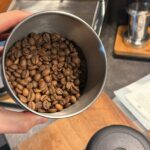
Yes. The roasting should be even and consistent. When you open a bag, look at the beans: they should not be burnt or excessively shiny and oily. Ideally, they should have a matte appearance.
You should also notice whether the beans have a relatively uniform size, shape and colour.
Coffee quality is sometimes assessed through a scoring system. Specialty coffee generally starts at 80 points on a 100-point scale, while scores above 84 indicate a particularly high-quality coffee.
The roasting profile also depends on the brewing method. Filter coffee generally uses a lighter roast, while espresso requires a slightly medium one. But darker does not mean burnt: dark roasting can destroy many of the coffee’s original aromatic characteristics.
Q7. What about the actual coffee extraction? Can we recognise a good espresso just by looking at it?
There are some visual clues. Espresso is generally prepared as a double shot, using approximately 18 grams of ground coffee and extracting around 30–50 grams of liquid coffee, depending on the recipe.
One thing I look at is the crema, the layer of foam on top of the espresso. It should be stable and creamy, without holes or irregular breaks.
If you stir it with a small spoon, the crema will naturally break apart, but it should quickly come together again. Ideally, the crema should be homogeneous and uniform in colour, without
tiger-like streaks or irregular patterns. There is also a little test I like to do: if you move a small spoon back and forth through the crema, it will naturally break apart, but it should then come together again, almost perfectly restoring its original surface. This is another indication of a well-structured crema.
Of course, extraction is a much more complex subject, but these are some of the visual signs I have learned to recognise through experience.
Q8. What would you recommend to someone who wants to make more responsible coffee choices?
I would say: be curious and ask questions!
Find out where the coffee comes from, who produces it, when it was roasted and how it is stored. Look for places that offer different single-origin coffees and are willing to tell you the story behind them.
For me, enjoying coffee is not just about what is in the cup. It is also about appreciating the people, the work and the entire journey behind every coffee bean.
by Alessandro La Malfa

Other Events
Allez L'Éco, Article, Events, Senza categoria
Allez L'Éco, Article, Events, Senza categoria