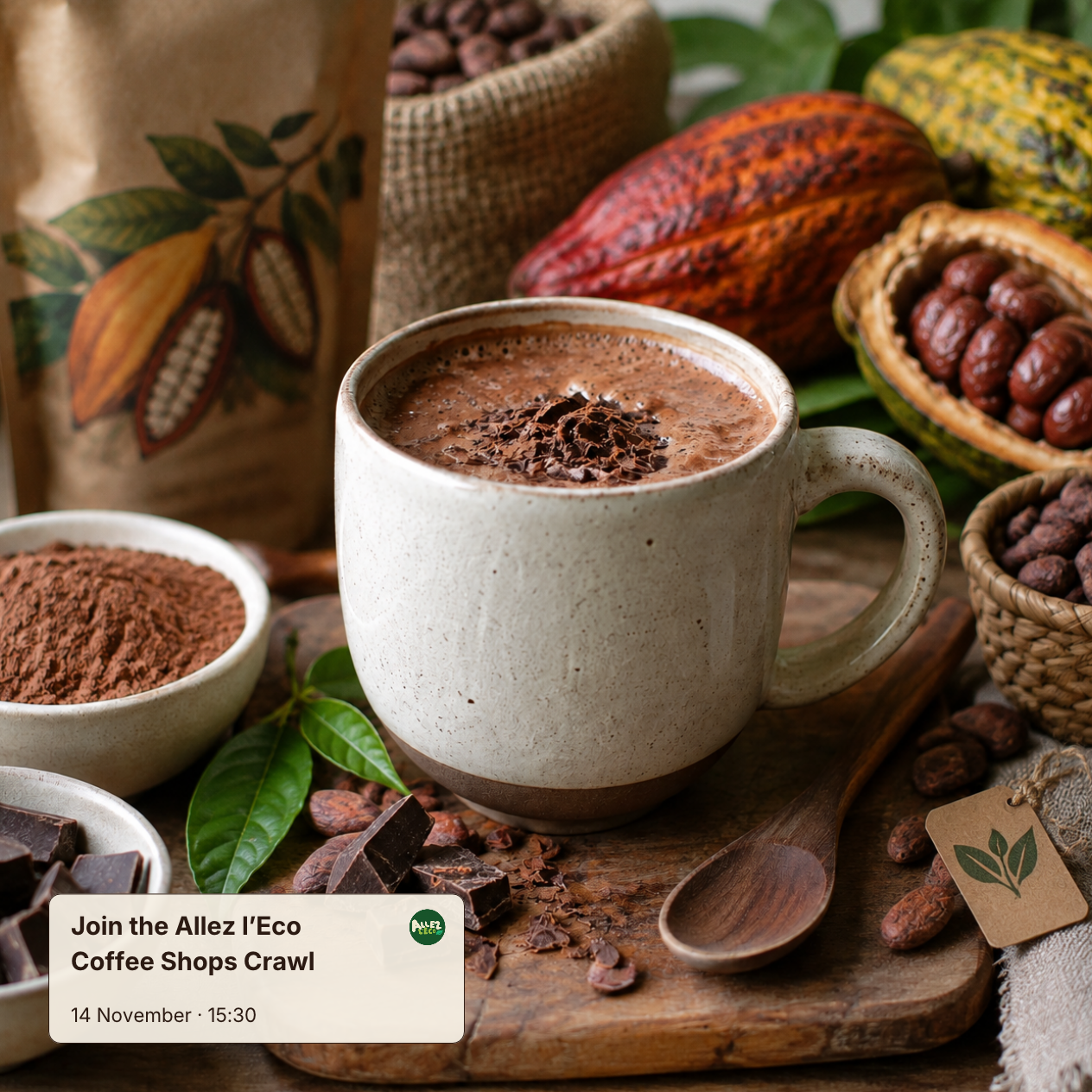
On winter days, when it’s already dark at five in the afternoon, there’s one thing a lot of us
look forward to: a hot chocolate. It’s not just a drink. It warms you up, makes everything feel
cosier, and it brings back good memories. Being a kid, evenings with the family, hanging out
with friends. Sometimes a warm cup and a bit of time to relax is all it takes to feel better.
In Luxembourg, where winter is cold and the days are short, hot chocolate is something
people of every age enjoy. Luxembourg is also a very international country: according to
STATEC, foreign nationals made up 46.6% of the population at the beginning of 2026. That
means a lot of different cultures, tastes and traditions living together. But whether it’s at
home, in a café or after a walk in the cold, hot chocolate is a pleasure most of us can share.
Still, have you ever asked yourself where your hot chocolate actually comes from? Most of
us just pick up a tub at the supermarket without thinking twice. Behind it, though, there’s a
long chain of people and processes. It usually begins on cocoa farms in West Africa..
Around 1.5 million children work in cocoa production in Ivory Coast and Ghana alone. Many
of them do dangerous jobs on their family’s farm because their parents earn too little to pay
adult workers, and some of them miss school because of it.
After the harvest, the beans are dried and shipped to factories in different parts of the world.
There they’re roasted and turned into cocoa powder, cocoa butter and chocolate.
A product like Nesquik is made by mixing cocoa powder with sugar and other ingredients,
then packing it into plastic tubs and sending it off to our shops.
The problems do not end with the people who grow it. Forests are cut down to make space
for new cocoa farms. In fact, producing the ingredients often does more damage to the
environment than shipping the finished product across the ocean. As we see, something as
simple as a cup of hot chocolate has an impact we almost never think about.
That doesn’t mean we have to give it up. It just means paying a bit more attention to what we
buy. Instead of always going for the same familiar brand, we could choose cocoa from
companies that try to improve conditions for farmers and farm in a more sustainable way.
Labels like Fairtrade and Rainforest Alliance show that a product meets certain social or
environmental standards, and some brands even tell you about the farmers and
cooperatives they work with.
These products can be a bit more expensive, but usually less than you’d expect. A tub lasts
for weeks, so in the end the difference is often just a few cents per cup. It’s a small change,
but it supports better farming and more responsible companies.
We can also choose cafés that serve responsibly sourced chocolate, shops that sell
sustainable products, and find out about organisations fighting child labour in cocoa farming.
Nobody can fix everything on their own, but what we buy still matters. When more people
start to care, companies have a real reason to change the way they produce things.
In a country as international as Luxembourg, these small choices can mean even more. Hot
chocolate will probably always be the thing that makes a cold winter afternoon a little
warmer, and that’s how it should stay. By thinking about what’s in our cup, we can keep
enjoying it while also respecting the people who make it and the environment we all depend on.
by Greta Norkute
GaiaLux volunteer and Allez l’Éco trainee
Other Events
Allez L'Éco, Article, Events, Senza categoria