During February and March 2026, GaiaLux delivered two pilot training sessions presenting the first key ideas, concepts, and learning approaches of the Erasmus+ project Allez l’Éco, an Erasmus+ initiative focused on training young people and youth educators in the complex challenge of designing and implementing sustainable events.
The project is coordinated by GaiaLux, in collaboration with a European consortium bringing together Fondazione Toscana Sostenibile (FTS) and Citizens Act (CiAct).
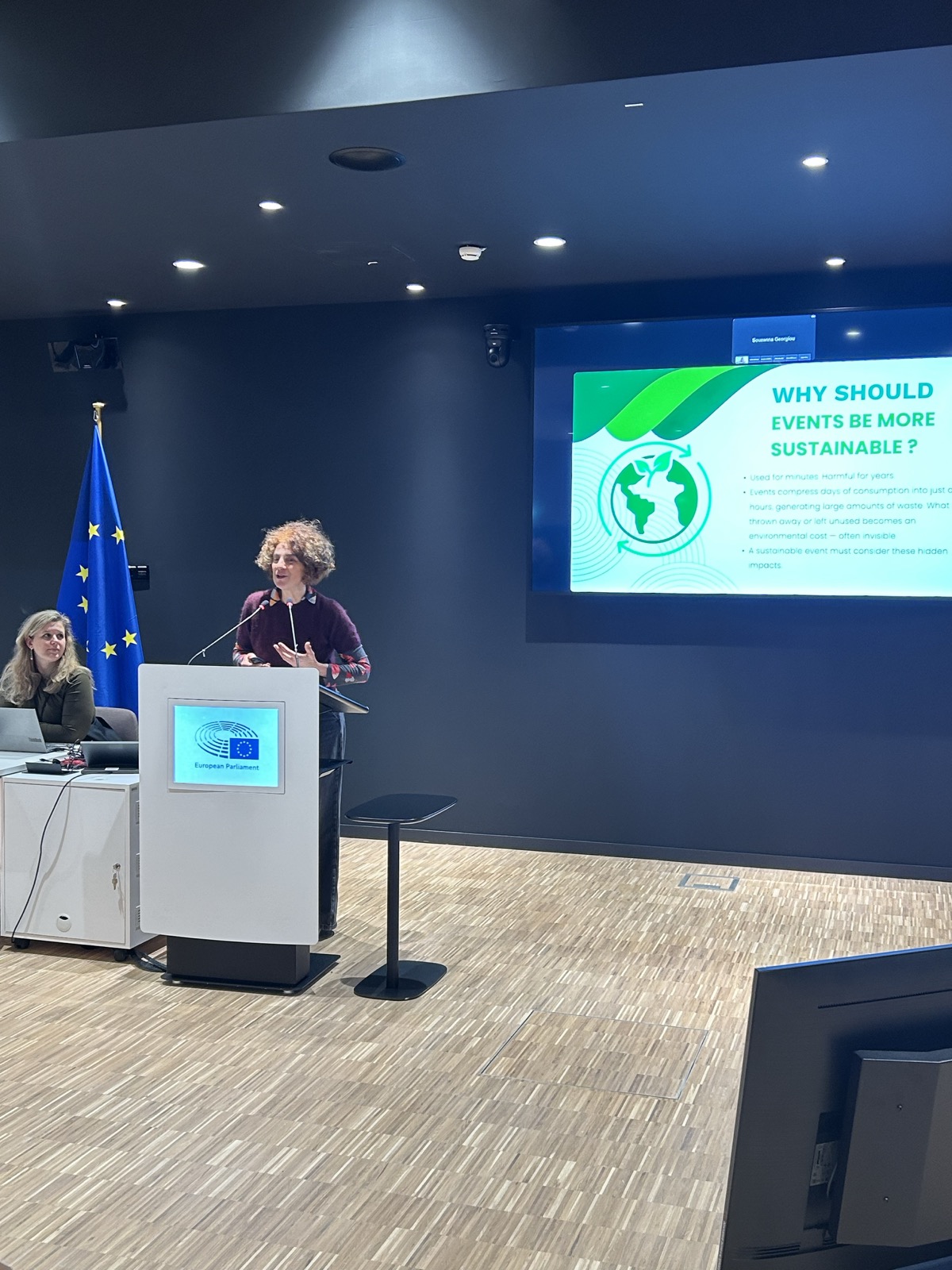
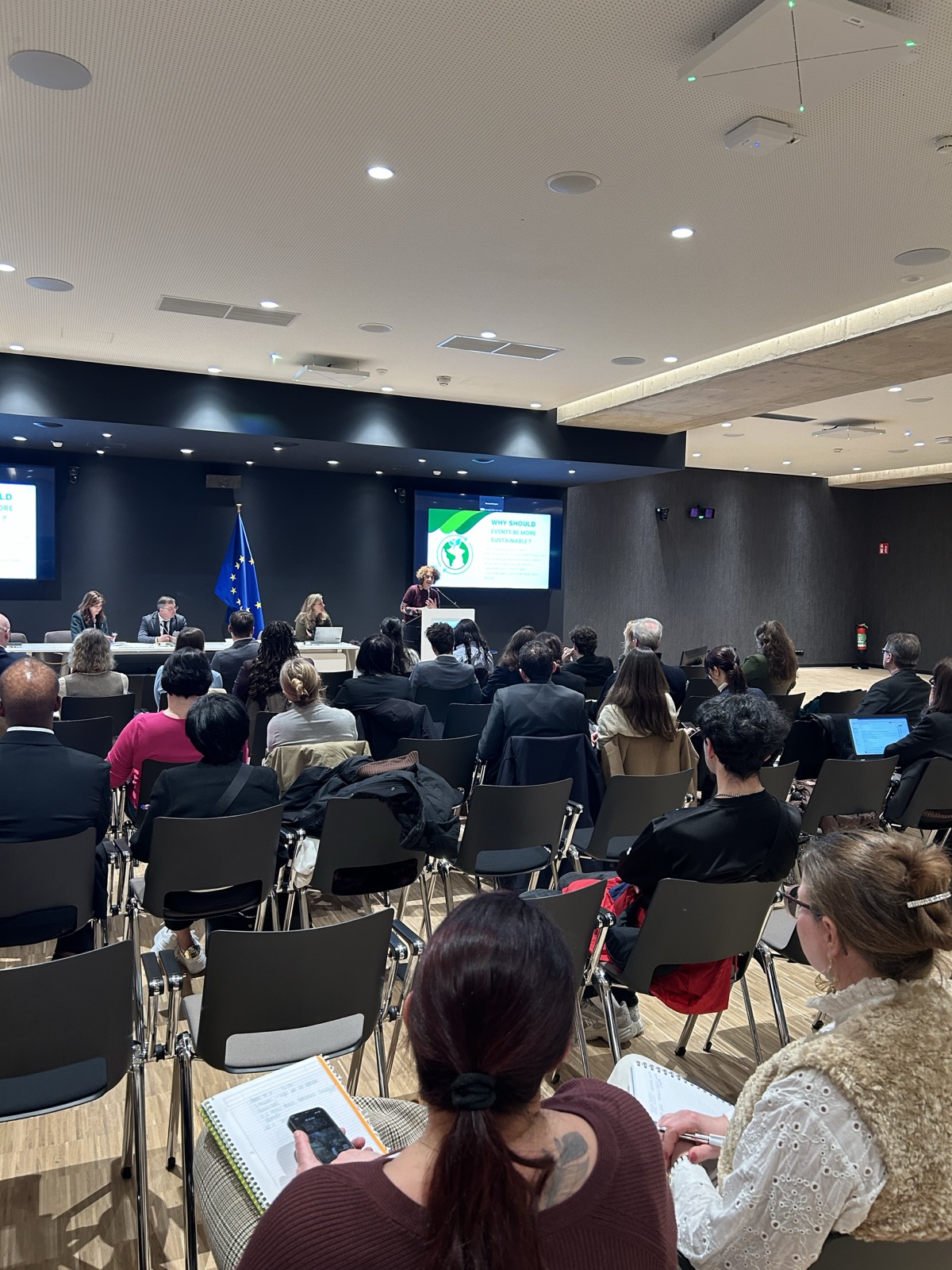
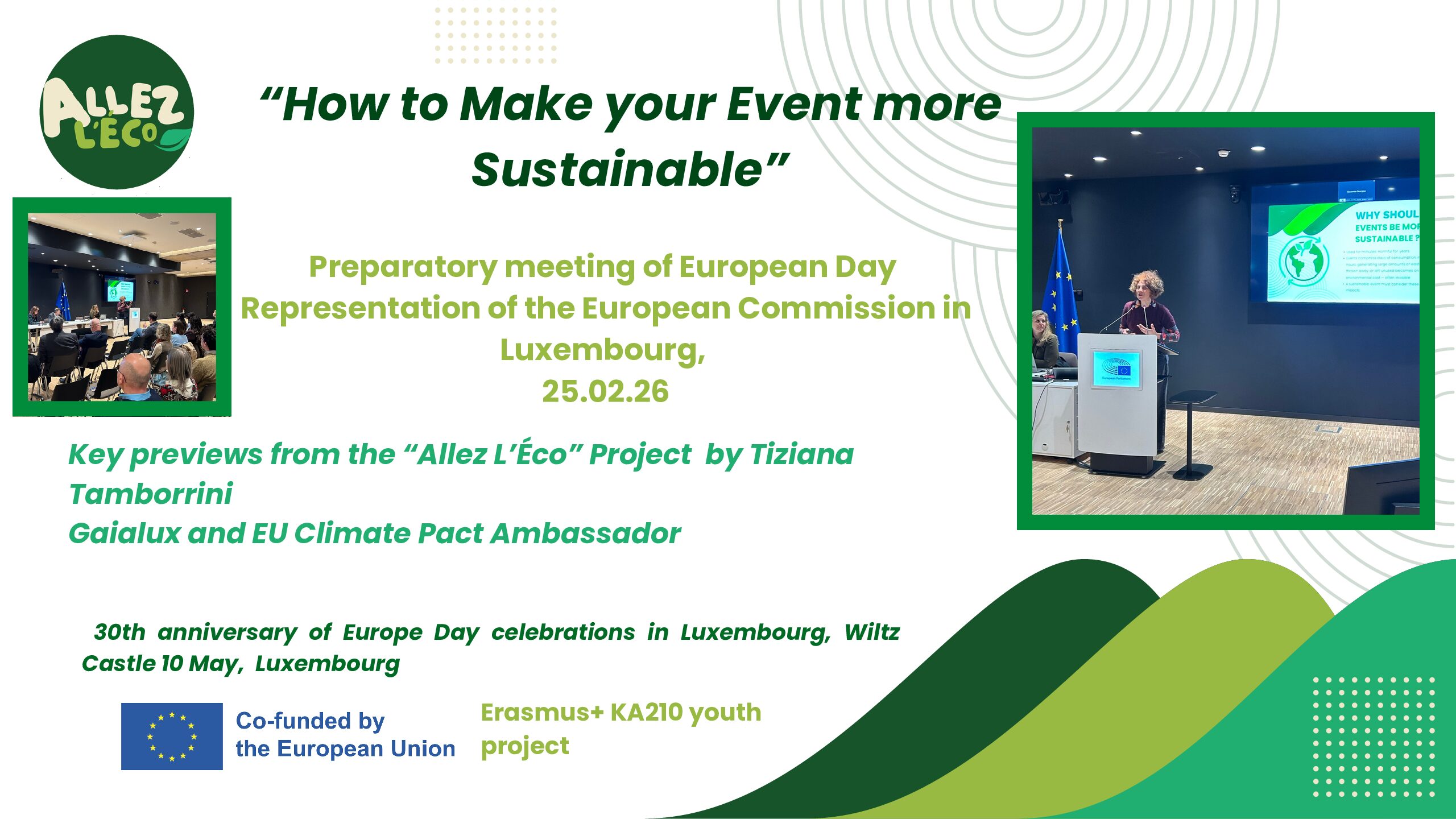
On 10 March, one of these pilot training workshops took place during a meeting hosted by the Representation of the European Commission in Luxembourg. During the session, GaiaLux shared the project’s key messages and preliminary learning outcomes with an audience of around thirty participants involved in the organisation of the large-scale Europe Day celebrations in Wiltz.
The workshop offered an initial insight into Allez l’Éco’s approach to sustainable event planning, highlighting practical strategies to reduce environmental impact, promote social inclusion, and foster innovation in the organisation of public events.
The pilot workshop also provided an opportunity to test and discuss some of the educational content currently being developed by the partnership, translating it into concrete actions to be implemented in areas such as waste prevention and management, sustainable procurement, local sourcing, responsible mobility, effective sustainability communication, and innovative approaches to participant engagement.
These themes were explored in relation to a real-life context: a large-scale public event involving multiple stakeholders, including vendors, civic associations, and citizens. This allowed participants to reflect on the practical challenges and opportunities of applying sustainability principles in complex event environments in view of the upcoming Festival of Europe in May.
A second opportunity to test and refine the project’s learning materials took place in two sessions on 27 of February and 17 of March through an interactive presentation delivered by GaiaLux to a group of volunteer students from Lycée Michel Lucius and the International European School Gaston Thorn. The activity was organised within the framework of the “Let’s Help” project, led by Luxembourgish partner organizations Afrilanthropy and Kehsia asbl, which aims to engage and empower young volunteers from secondary schools across Luxembourg. The session introduced GaiaLux’s vision of sustainability and explored how environmental, social, and economic responsibility can be integrated into the planning and delivery of events. The youths were encouraged to reflect on sustainability challenges through practical exercises and group discussions, allowing them to connect broader sustainability principles with real-life situations and community initiatives. The activity also provided valuable feedback for the Allez l’Éco partnership, helping to ensure that the future training programme remains relevant, engaging, and accessible to young people.
Why sustainable events matter
The pilot training sessions explored a central question at the heart of the Allez l’Éco project: why should events be more sustainable? The presentation and discussions were developed around this question and the key learning modules currently being designed by the consortium (link to the presentation here).
It was clearly highlighted that events are powerful spaces for connection, learning, and community building. At the same time, although they are often perceived as one-off occasions with a limited impact, they actually concentrate significant levels of consumption into a very short period, generating environmental and social impacts that often remain invisible. Food waste, packaging, transport emissions, energy use, and promotional materials all contribute to a footprint that extends far beyond the event itself.
Studies show that a single conference participant can generate around 1.89 kg of waste per day, meaning that even medium-sized events can quickly result in several tonnes of waste. Travel—particularly air travel—further increases the environmental impact, often representing one of the largest sources of emissions linked to international gatherings.
For Allez l’Éco, sustainability in events is therefore not only about waste management, but about rethinking the entire planning process, from the earliest design phase to the final reporting stage.
Key areas discussed in the session included:
- integrating sustainability objectives from the start of planning making the event a circular and even regenerative experience
- reducing impacts through smarter choices in travel, food and logistics
- applying the 5Rs (Rethink, Refuse, Reduce, Reuse, Repair, Recycle)
- using innovation to engage participants and reduce waste
- strengthening communication and transparency to avoid greenwashing
- supporting local sourcing and socially responsible supply chains
- using data (such as waste audits) to measure and improve performance
These principles are not theoretical: they are intended as practical tools for organisers, youth workers and young people to design more responsible and impactful events.
A full set of training materials and tools will be made available through the Allez l’Éco learning platform, including the slides presented during the workshop.
Conclusions and next steps
Currently, the Allez l’Éco partnership—GaiaLux, Fondazione Toscana Sostenibile, and Citizens Act (CiAct)—is working intensively to finalise the core learning content developed over recent months. This work builds on the inspiration, insights, and recommendations emerging from the two Allez l’Éco Forums held during the winter of 2025, which brought together experts, practitioners, youth workers, and young participants.
These learning materials will be integrated into a dedicated online learning platform, to be officially launched during the upcoming Train the Trainers mobility programme in Cyprus. The platform will then support national training cycles starting in September across all partner countries.
Designed as an open educational resource, it will be freely accessible to civic organisations, youth workers, educators, and all those interested in promoting sustainable event management.
Through this process, Allez l’Éco aims to equip young people and youth workers with the knowledge, skills, and practical tools needed to design and deliver events that are not only engaging and impactful, but also environmentally and socially responsible.